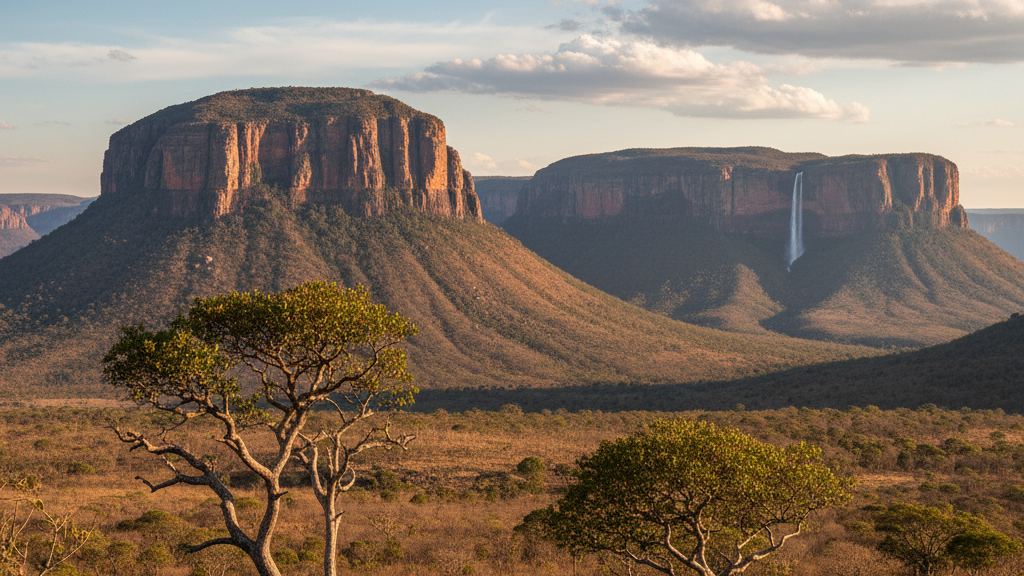
tea dark rivers, white sand, coffee drying on the terrace
Book a Stay in the Chapada Diamantina for a Week, Three Weeks or a Season
Slow Latitudes books one stretch of the Bahian tableland at three lengths: a house or a room in the old diamond towns and the valley villages for 7 nights from $2,065 per person on two sharing, for 21 nights, or for a season of 56 nights. People come for the flat topped hills and the rivers that fall off the sides of them, and then find that the region runs on a wet half and a dry half rather than on anybody's arrival. Seven nights and eight weeks are not one purchase at two sizes.
Reserve your weeksA reply is written within one business day, by a person.
The Chapada Diamantina is a block of quartzite standing out of the Bahian interior about 265 miles inland from the coast, worn into flat topped hills with rivers coming off them the color of strong tea. You can book a stay in the Chapada Diamantina through this office at three lengths, 7 nights, 21 nights or a season of 56 nights, and it is sold that way because the region does not hand the three of them the same thing. A week gives you the rock. Three weeks gives you the water changing. A season gives you a village during the months when nobody is looking at it.
What we put you in is a house or a room inside somebody's building, not a compound. Depending on the town and the length that means a two bedroom house of rendered stone on a dirt lane at 3,280 feet, a room in a family pension on the square of one of the old diamond towns with six doors around a courtyard, or one wing of a farm where the rest of the building is the family's and coffee is out drying on the concrete in front from May onward. None of them are air conditioned. Most have a cold shower, a ceiling fan, rooms high enough for it to matter, and a mango tree in the yard that will drop fruit on the roof through January.
The three figures below are per person on two sharing, and reaching Brazil is not inside any of them. The long leg is yours to arrange and stays yours, because airfare is not something this office deals in. What sits inside the figure is the nights, the household, the utilities, the two road transfers and a fixed count of guide days.
A week
7 nights7 nights, from $2,065 per person.about $295 a night
Seven nights gets you the shape of the country: two or three of the mesas, the tea colored pools below the old diamond town, one flooded cave with the sun in the water if your dates fall between May and August, and whatever the rivers happen to be doing that week.
Three weeks
21 nights21 nights, from $4,935 per person.about $235 a night
By the third week you have seen the same fall at two different volumes, you know which of the four kitchens in the upper village opens on a Tuesday, and if you land in the middle of June the whole interior shuts for corn and bonfires on the twenty third and twenty fourth and you are either inside that or standing next to it.
A season
56 nights56 nights, from $10,680 per person.about $191 a night
After a month the man with the pack mule stops quoting you a price for a load into the inner valley, the woman who lets the house stops writing down towels and stops adding the wash to the bill, somebody hands you one corner of a coffee tarpaulin when a storm comes over, and you learn that most days here are hot, quiet and without event, which is the part a week cannot reach.
- What this office books
- Slow Latitudes Bookings LLC books the nights, the family or the pension that keeps the property, the road transfer from the highway town at each end, the walking guide days where the ground asks for one and the pack animal for a load into the inner valley, and it books no airfare, no bus seat, no hire car and no ticket to anything.
- Who books it
- A person booking this wants a working interior where the year turns on the rain and the coffee rather than on a season of visitors, and wants to be there long enough to watch the water arrive or the water go.
- Why somebody picks elsewhere
- If you want a beach, a city with something on a Wednesday night, food served after ten, or a town where English carries you through an ordinary day, the coast is 265 miles away and it will suit you better.
- In the figure
- The house, the pension room or the farm wing for the nights named, priced against the length of the stay and not by the week; bed linen and towels, changed twice a week on the 7 night stay, weekly on the 21 night stay and every second week across the season; water, power and bottled gas at the level two people use, with no meter read against you at the end; the road transfer from the highway town on the day you arrive and the day you leave, once each way at any length; a written introduction to the family that keeps the property, set out in Portuguese and in English; drinking water in the twenty litre bottle, replaced as often as the stay needs it; one walking guide day for every seven nights booked, so a week carries one and a season carries eight, which is the only line here that scales exactly with the length; a pack mule and a handler for a load into the inner valley, once on the 21 night stay and twice across the season; and the yard, the terrace and whatever ground the property holds.
- Not in the figure
- Your flight, which is your own booking and runs $850 to $1,690 round trip per person in economy out of the American South; a hire car for the weeks you want one, not needed inside the towns but the only way to reach the caves and the far mesas on your own, $270 to $430 a week plus fuel near $5.10 a gallon; food and drink you buy for yourself, $105 to $190 a week for two people cooking at home; the plate lunch in the towns at $5 to $9 a head and dinner in the upper village at $11 to $22; guide days past the ones inside the price, $50 to $85 a day for two; entry at the staffed gates and at the flooded caves, $4 to $14 each; nights in the houses of the families in the inner valley on a three to five day crossing, $28 to $45 a person a night with meals; a Portuguese teacher in the valley town, $14 to $24 an hour; a linen change asked for outside the schedule above, $18 to $30; and anything the operating company puts on its own invoice, which that company writes and this office does not.
- Who should not book it
- The upper village sits at 3,280 feet on dirt lanes that run uphill from every door, the ground out to the falls and the mesa rims is loose quartzite and steep in both directions, and there is no level walk from anywhere except the main street of the valley town. Almost nobody outside the guiding trade speaks English, the family keeping your house will speak Portuguese to you and nothing else, and the interior accent is not the one taught in classes. From November to January it rains most afternoons and everything you own stays faintly damp, in the dry months the middle of the day sits at 90F with no cooling worth the name, and there is one cash machine in the valley town which is often empty by Friday evening. A season here is mostly ordinary hot days with nothing in them, the same river pool, the same four kitchens, the same dozen people, and if that reads as a shortage rather than the point of the thing, take the week.
Each figure is a starting point for two people sharing one room. Costing the exact weeks you name takes two to four working days: the letting company must answer before a number exists, and an air ticket is never folded into one.
The rock, and where the water goes
Everything here follows from one piece of geology. The tableland is quartzite, hard and poor, so the soil on top is thin and what grows is wiry scrub rather than forest, and the water running off it picks up tannin and comes down the color of weak coffee while being perfectly clean. The rivers have cut the block into separate mesas with vertical sides and left white quartz sand in the beds, which sorts itself into bands of ochre, red and grey that people used to layer into bottles and sell at the door of the house.
The falls follow the rain and nothing else. From the middle of November through January it rains most afternoons, a small river can rise a foot inside two hours, and the long fall on the far side of the upper village, about 1,115 feet in one drop, carries enough water that the wind turns the bottom half of it into cloud before it reaches the ground. Walk out to the same rim in the second half of October and you find a dark stain on the rock and a stream you can step over at the top. The pools below the valley town hold water all year because they are fed off the plateau, but by September they are green and shallow and the rock slide upstream of them is more rock than slide.
An hour from the valley town the quartzite gives way to a belt of limestone, and there are dry caves with rooms the size of a church and two flooded ones where the sun comes through a hole in the roof and puts a shaft straight down into the water. That happens between the end of April and the first week of September, between about half past twelve and half past two, and not otherwise. People book seven nights around it and then get two overcast days in a row. Over three weeks the same thing becomes a matter of picking another morning.
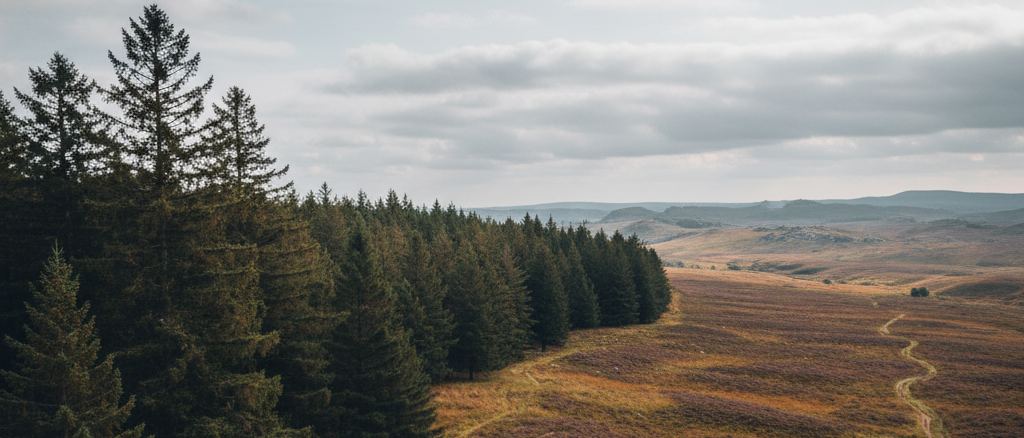
The year on the tableland
Nothing here is spread evenly across the calendar, and a fortnight in either direction gives you a different place standing on the same rock. That is why we ask for your dates before quoting rather than after, and it is not procedure.
- January
- Rain most afternoons, rivers up and brown, mango coming down on the roofs, the long fall at full weight and blowing back on itself.
- February
- Water still high and the pools warm, the town on the square out late for Carnival while the upper village barely registers it.
- April
- The rain thins in the second half, the campo turns from green to straw, and from about the twenty fifth the sun starts reaching the water in the flooded caves.
- May
- Picking begins on the higher coffee ground, mornings at 61F in the upper village, dry air and every mesa edge visible from the road all day.
- June
- Eleven hours and twenty minutes of light, nights near 48F above 3,000 feet, and the interior stops on the twenty third and twenty fourth for corn, bonfires and forro until four in the morning.
- July
- Coffee coming off in volume and drying on every terrace, days at 82F with no humidity in them, the inner valley crossing dry underfoot and the houses along it full.
- September
- The campo burns and the smoke flattens the view for a week or two at a time, the falls down to a trickle, the shaft of light in the caves gone after the first few days.
- November
- First real storms, usually in the second half, the rivers back inside a single afternoon, and the cuts on the road up to the upper village turned to red mud.
A week lands on one row of that and takes it for the truth about the region. Three weeks usually straddles a change: you arrive with the rivers up and leave with them settling, or you arrive in the coffee and leave in the smoke. A season crosses two changes and starts behaving like a short residency, with the domestic consequences that implies. You will misjudge the produce day once and eat rice for two days. You will work out that the bakery in the valley town opens at half past five and has nothing left by nine on a Saturday. Somewhere in the fifth or sixth week the woman who lets you the house stops writing down towels and stops putting the wash on the bill, because nobody strips and turns over a room that has held the same two people since June.
What a night costs at each length
Seven nights comes to $295 a night for each of two people sharing. Twenty one nights comes to $235. Fifty six nights comes to a little over $190. Those are the numbers, and the arithmetic and the conclusion are both yours. The mechanism behind them is dull and it is not a courtesy. A room held for eight weeks is not stripped, scrubbed, aired and let again every Saturday, the linen goes through the tub a third as often, the road transfers happen twice instead of sixteen times, and the guide days sit loose inside a long stay instead of being crammed into one week where every one of them has to come off whatever the sky is doing. What seven nights buys is the nights and one set of conditions. What eight weeks buys is the nights and a routine.
All three lengths carry the same inclusions and leave out the same list, both set out above, and the flight is on neither and will not be. If you want a figure written against your own weeks rather than the starting one, send the exact dates, the town, the number of bedrooms and whether you want a house on a lane or a room on a square. A price written against real dates comes back in two to four working days, because it is written by the company that runs the property and not by anything at this end.
Who confirms it and who bills you
This is a small booking office in Baton Rouge, Louisiana, and it holds title to no vehicle, no bedroom, no mule and no boat in any part of this. Slow Latitudes Bookings LLC places your dates with the firm that actually operates the house or the pension, that firm confirms to you in writing, and whoever runs the weeks is the party that sends the bill, on its own paper and under its own terms. No money moves through here in either direction and there is nothing on this page to settle.
Entry paperwork is between you and the authority that issues it. This office does not advise on that, will not read your documents for you and will not guess. Ask the issuing authority before you commit to a long stay.
To reserve, send the weeks you can actually travel, the fortnight either side you could move to if the house is taken, and how many people are sharing. Write to bookings@slowlatitudes.com or call +1 (225) 766-2418. The office is at 9422 Common Street, Suite 2, Baton Rouge, LA 70809, in East Baton Rouge. If something on this page has gone stale, and the bus times do move, send it to corrections@slowlatitudes.com and it gets changed.
Ask this office to reserve your weeks
The form below is open every hour of every day, and what it collects is read by a person, who replies within one business day. Nobody is committed by sending it, nothing is charged for it, and no call or message goes out from here unless you ask for one.