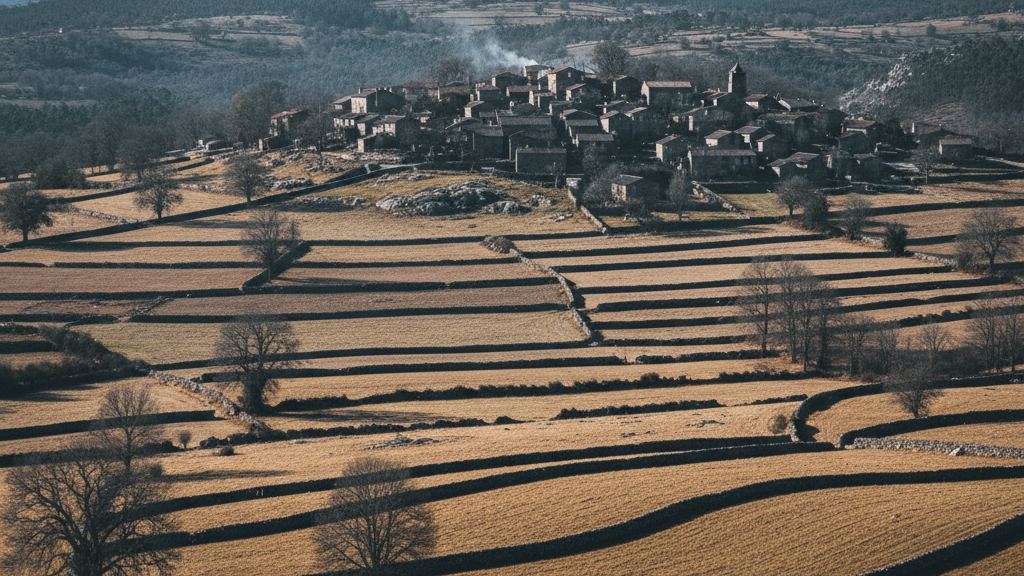
rye bread, frost on the granite, chestnut smoke in the lanes
Reserve a Stay in Tras-os-Montes for a Week, Three Weeks or a Season
Slow Latitudes books one place on the granite plateau behind the Douro at three lengths: a stone house or a room in a family pension for 7 nights from $2,310 per person on two sharing, for 21 nights, or for a season of 56 nights. People go because the year up there is still organized around the rye, the chestnut and the first killing frost rather than around anybody arriving. The three lengths are not the same holiday made longer.
Reserve your weeksA reply is written within one business day, by a person.
Tras-os-Montes is the granite tableland behind the Douro, roughly 2,400 feet up, where the terraces stop climbing and the ground turns to rye stubble, chestnut grove and thin walled pasture. You can reserve a stay in Tras-os-Montes through this office at three lengths, 7 nights, 21 nights or a season of 56 nights, and the reason we sell it that way is that the plateau does not hand out the same thing to all three. A week gets you the country. Three weeks gets you its habits. A season gets you the part nobody writes down, which is that most days up there nothing happens and the people who live there have arranged their lives around that fact rather than against it.
What we place you in is a house or a room, not a resort. Depending on the village and the length, that means a two bedroom stone house with a wood stove and a yard, a room in a family pension above a square, or one wing of a working farm where the rest of the building is somebody's home and the dogs are not decorative. All of them are granite, all of them have small windows because the winters are what they are, and none of them have a lobby, a pool or anybody whose job is to be pleased to see you.
The three prices below are per person on two sharing, and none of them carry a flight. Getting to northern Portugal is your own arrangement and stays your own arrangement. What sits inside the figure is the nights, the household, the fuel and the two road transfers.
A week
7 nights7 nights, from $2,310 per person.about $330 a night
Seven nights gets you the plateau under one weather: the granite hamlets, one Sunday market down in the valley town, one long day along the top of the terraces above the river, and the shape of the country without any of its calendar.
Three weeks
21 nights21 nights, from $5,145 per person.about $245 a night
By the third week the bread van and the school bus are things you plan around instead of notice, you have been up the sierra twice in different weather, and if you land in the last days of October the chestnut harvest starts under you and the whole village becomes unavailable to you for ten days.
A season
56 nights56 nights, from $11,368 per person.about $203 a night
After a month the cafe leaves your table alone, the woman who keeps the house stops counting sheets and stops charging for the wash, somebody expects you at a pig killing in December or at the threshing in July, and you learn that most days up there contain nothing at all, which is the part seven nights cannot show you.
- What this office books
- Slow Latitudes Bookings LLC books the nights, the household that keeps the property and the road transfer at each end, and it books no flight, no rental car, no railway seat and no ticket to anything.
- Who books it
- A person booking this wants a working upland where the year turns on the chestnut and the killing frost, and wants to be there long enough to watch one of them turn.
- Why somebody picks elsewhere
- If you want restaurants serving past nine, a beach, a museum open on Monday or a town where English gets you through the day, the coast is about 160 miles west and it will suit you better.
- In the figure
- The stone house or the pension room for the nights named, priced by the length of the stay rather than by the week; bed linen and towels, changed weekly on the 7 and 21 night stays and every second week across the season; wood for the stove from November through March, delivered by the load and topped up for as long as the stay runs; electricity, water and bottled gas at the level two people use, with no meter read at the end; the road transfer from the valley station or the nearest airport town on the day you arrive and the day you leave, once each way whatever the length; a written introduction to the household that keeps the property, set out in Portuguese and in English; a standing delivery of bread, milk and vegetables to the door on the van days, which runs for as many weeks as you are there; the yard, the woodshed and whatever ground the property holds; and, on the 21 night and 56 night stays only, the household wash taken in and returned rather than counted by the load.
- Not in the figure
- Your flight, which is your own booking and runs $780 to $1,450 round trip per person in economy out of the American South; a rental car, close to necessary once you are above the valley floor, $310 to $520 a week plus fuel at roughly $7.20 a gallon; food and drink you buy for yourself, $190 to $340 a week for two people cooking at home; meals in the valley towns, $18 to $34 a head with wine; firewood past the delivered load in a hard January, $95 to $160 a load; entry to the municipal museums, the folk dancing and the winter smoked meat fairs, $4 to $12 each and shut on Mondays; a language teacher in the valley town if you want one, $22 to $35 an hour; a second linen change in any week you ask for it, $30 to $45; and anything the operating company adds to its own invoice, which that company writes and this office does not.
- Who should not book it
- The upper villages stand between 2,300 and 2,700 feet on ground that runs uphill in every direction, the lanes are cobbled and broken, and there is no level walk from any door. Almost nobody in the hamlets speaks English, the household keeping your house will speak Portuguese to you and nothing else, and near the border you will hear a language that is neither Portuguese nor Spanish. Winter is long and dark, granite holds damp whatever you do to it, and in July the valley below runs to 95F with no cooling worth the name. A season up there is mostly ordinary days, the same three miles of track, the same cafe, the same six people, and if that reads as a shortage rather than the whole point, take the week and go home.
Each figure is a starting point for two people sharing one room. Costing the exact weeks you name takes two to four working days: the letting company must answer before a number exists, and an air ticket is never folded into one.
What is actually on the plateau
The land runs from about 2,300 feet on the tableland to 4,330 feet at the near sierra and 4,860 feet at the northern one, and the working year is short. Rye goes into thin acid ground in October and is cut in the last ten days of July, usually with the whole hamlet in the same field on the same three days. Chestnut is the other crop and the more important one: the groves are picked from the last week of October into the middle of November, and during those ten or twelve days the village is simply not available to you. The stone ovens run all day, the smell gets into everything you own, and nobody has time for a conversation. If you come in the first week of November you will find this either the best thing that has happened to you or a locked door, and it is worth knowing which sort of visitor you are before you pick your dates.
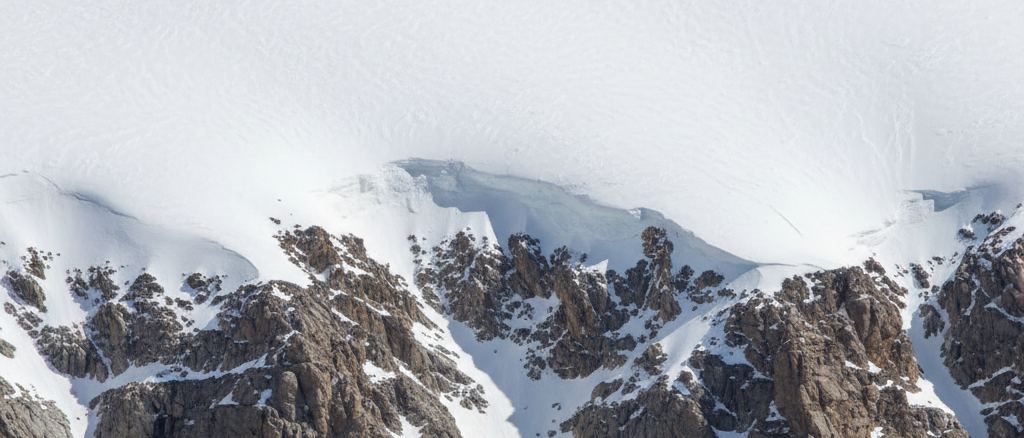
Winter is the other half of the argument. From late December to the middle of February the high ground sits between 18F and 26F at night, granite houses stay cold at floor level whatever the stove does, and the villages fill in rather than empty out, because the pig killings happen in those weeks and each one takes a household two days and about nine people. December gives roughly nine hours and twenty minutes of daylight. A cart track over the near sierra holds drift in its north facing cuts and does not clear until the last week of March, which matters if you have taken a season starting in February, because in your sixth week a walk that was impossible becomes an afternoon.
What each month does here
Nothing on this plateau is evenly spread. Two weeks apart in either direction and you are looking at a different place with the same stones, which is why we ask for your dates before we quote rather than after.
- January
- Nights at 20F on the top ground, ovens lit from eight in the morning, pig killings in the yards, the cafe shut Monday as always.
- February
- Almond flowers open down in the valley while the plateau is still white in the shade; the smoked meat fairs run in the valley towns most weekends.
- March
- Frost lifts around the middle of the month, lambs out on the common ground, the sierra track still shut with drift until the last week.
- April
- Rye a hand high, eleven hours of light, rain most weeks, and every stone wall in flower.
- June
- Fifteen hours of daylight, hay in on the plateau, valley afternoons already at 88F, the river low and green under the terraces.
- July
- Rye cut and threshed in the last ten days, 92F to 97F below, water thin in the upper lanes for two hours most afternoons.
- September
- The heat breaks in the second week, almonds coming off down in the valley, walnut next, the first fires lit at night on the tableland.
- October
- Rye sown early in the month, chestnuts down from about the 25th, ovens going, the whole hamlet in the groves and nobody free.
- December
- Nine hours and twenty minutes of light, olives at the press through the night, the road over the top salted but not always open at dawn.
A week dropped anywhere on that list gives you one square of it. Three weeks usually spans a turn: you arrive in the heat and leave in the chestnut, or arrive with the track shut and leave with it open. A season crosses two turns and starts to look less like a visit and more like a short residence, with the ordinary domestic consequences. You will run out of something and have to work out where it is bought. You will get the van days wrong once and eat badly for two days. By the fifth or sixth week the woman who keeps your house stops counting sheets and stops billing the wash, because nobody strips and re-lets a room that has the same two people in it until March.
What the three lengths cost per night
Seven nights works out at $330 a night for each of two people sharing. Twenty one nights works out at $245. Fifty six nights works out at $203. Those are the figures; do the arithmetic yourself and decide what it tells you. The mechanism behind them is not complicated and it is not a favor: a house let for eight weeks straight is not stripped, scrubbed, aired and turned around every Saturday, the linen goes through half as often, the transfers happen twice instead of eight times, and the household that keeps the property spends its labor once at each end rather than weekly. What you buy with a season is the nights and the routine. What you buy with a week is the nights and one weather.
All three figures cover the same list of things, set out in the sheet above, and all three leave out the same list. The flight is not on any of them and never will be. If you want the cost of your dates rather than the starting figure, tell us the exact weeks, the village, the number of bedrooms and whether you want the wing on a farm or a room above a square, and pricing that takes two to four working days at this end, because the answer comes back from the company running the property and not from a screen.
How the booking is placed and who sends the bill
This is a small booking office in Baton Rouge, Louisiana, and it owns nothing on the ground. No aircraft, no bedroom, no vehicle and no boat in any part of this belongs to Slow Latitudes Bookings LLC. We hold your dates with the firm that actually runs the house or the pension, that firm confirms in writing, and that firm invoices you directly on its own paper under its own terms. No money moves through this office in either direction, and there is nothing on this page to pay.
Entry paperwork is between you and the authority that issues it. This office does not advise on it, will not tell you what your documents allow, and will not guess. Ask the issuing authority before you commit to a season.
To reserve a stay in Tras-os-Montes, send the dates you can actually travel, the two or three weeks either side that you could move to, and how many people are sharing. Write to bookings@slowlatitudes.com or call +1 (225) 766-2418. The office is at 9422 Common Street, Suite 2, Baton Rouge, LA 70809, in East Baton Rouge. If something on this page is wrong about the plateau, and people who have stayed do write in about the van days, send the correction to corrections@slowlatitudes.com and it gets changed.
Ask this office to reserve your weeks
The form below is open every hour of every day, and what it collects is read by a person, who replies within one business day. Nobody is committed by sending it, nothing is charged for it, and no call or message goes out from here unless you ask for one.