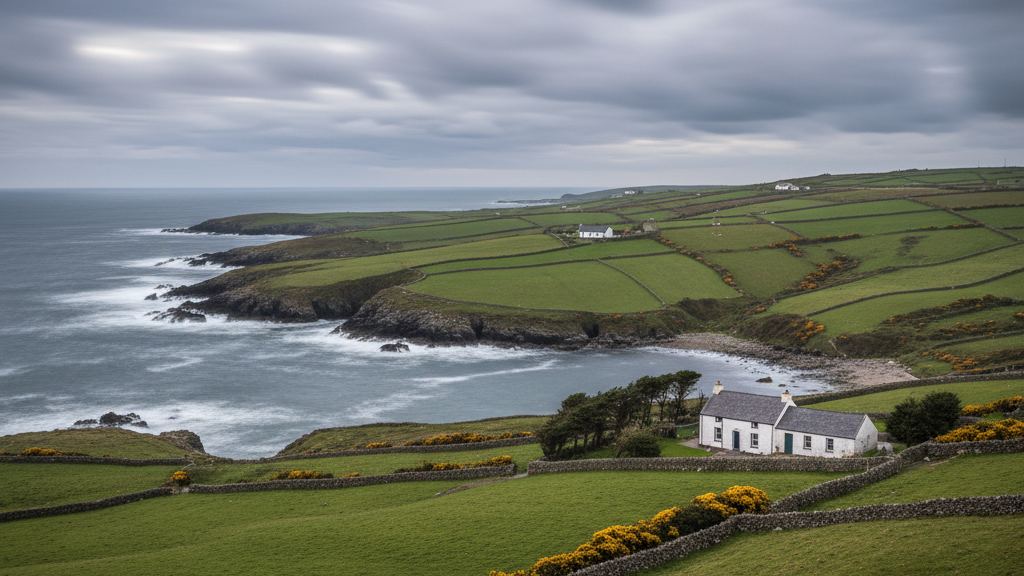
fuchsia hedges in october, mackerel off the pier, rain arriving sideways
Reserve a stay in West Cork for a week, three weeks or a season
West Cork, on the southwest corner of Ireland, in a house of your own for seven nights from $2,415 per person, twenty one nights from $5,532, or a season of fifty six nights from $10,864. Five peninsulas run out into the Atlantic from the same short stretch of coast, and no two of them give you the same week. The growing season is long enough here that fuchsia hedges are still in flower in the third week of October.
Reserve your weeksA reply is written within one business day, by a person.
West Cork is the bottom left corner of Ireland. Five peninsulas run out into the Atlantic from about forty miles of coast, with a bay between each one, and the road onto a peninsula is usually the road back off it. The distances read small on a map and are not. Skibbereen to Castletownbere is 85 km and takes an hour and forty minutes, because the road goes around Bantry Bay instead of across it. That one fact decides most of what a week here can hold and most of what it cannot.
What you reserve is a house in one of those places: a stone cottage with two bedrooms, a wing of a working farm, or two rooms over a square in one of the towns. It is the same house at all three lengths. What changes is how much of the year you are standing inside while you are in it, and on this coast that turns out to be the whole of the difference. Seven nights is a visit. Twenty one nights is long enough for the weather to show you two different versions of the same headland. Fifty six nights is long enough that the woman who opens the shop at eight stops telling you where things are.
All three figures are per person with two people sharing, and not one of them contains a flight. The long leg across the ocean is yours to arrange, because airfare is not something this office handles.
A week
7 nights7 nights, from $2,415 per person.about $345 a night
Seven nights puts you on one peninsula with one draw of the weather, the Friday market in Bantry or the Saturday one in Skibbereen but not the pattern of either, and roughly one day that stays clear from morning until dark.
Three weeks
21 nights21 nights, from $5,532 per person.about $263 a night
By the third week you have had a wet week and a dry one, you know that the fish comes to the Saturday market and not the Friday, and you have driven the Healy Pass on a day when you could see down the far side of it.
A season
56 nights56 nights, from $10,864 per person.about $194 a night
After a month the shop puts a loaf aside for you without being asked, the linen goes to a fortnightly change because nobody is turning the house over on a Saturday, and you stop driving anywhere on a Sunday in summer because the rowing regattas close the harbour roads.
- What this office books
- Slow Latitudes reserves the house and every night in it, and will arrange the rental car and the drive down from the airport if you ask; it does not touch the flight, and any crossing to the islands is timetabled, sold and billed by the company that holds the licence for that passage.
- Who books it
- Somebody reserving this wants to watch weather cross a bay for twenty minutes before it lands on the roof, and to have a kitchen worth being in when it does.
- Why somebody picks elsewhere
- If you need a warm dry afternoon at an hour you can plan around, the Mediterranean coast in the same weeks will give you that and this one will not.
- In the figure
- The house itself and every night of it, held in your names; a written list from the owner of what is in the house and what you bring, sent before you commit; linen and towels, changed weekly at seven and twenty one nights and every second week across a season, because eight weeks is one changeover and not eight; electricity, heating oil or solid fuel, and the group water scheme charge, all of which scale with the length of the stay; the key handover at the house with whoever holds them, which happens once whatever the length; a note written against your exact dates covering the market days, the harvest weeks and the days the kitchens near you are shut; the times the island companies have scheduled their crossings during your stay, which they set and can change; one rewrite of the whole reservation if your dates move by up to two weeks; and a named person at Slow Latitudes answering while the reservation is live.
- Not in the figure
- The flight, which is yours to book and runs roughly $740 to $1,580 round trip per person from Atlanta, Houston or Dallas depending on the month; a rental car, which is not optional on any of these peninsulas, $340 to $690 a week in July and August and $210 to $380 outside them; fuel, about $95 a week for the driving people actually do here; the 85 km drive down from the airport, or a private car for it at $180 to $240 each way; food, whether you cook it or eat out, $130 to $320 per person per week; the island crossings, which the operating companies sell and bill under their own licences, about $22 to $34 return per person; laundry sent out rather than done in the house, $18 to $30 a load; extra oil or gas above what the owner leaves, $60 to $190 across a season; and parking on market days at $2 to $4 an hour plus the tunnel toll out of Cork at about $2.50 each way.
- Who should not book it
- Do not reserve a season here if you need a dry afternoon at a fixed hour, because this coast gets rain on something like 200 days a year and most of it is not dramatic weather, just a grey that arrives off the water and sits on the hill for three days. The peninsulas are steep and the lanes are single track with grass down the middle, so if reversing a car 200 m uphill for a tractor is beyond you the driving alone will wear you out. Houses here are often stone with one wall set into a hill and they are damp from November to March whatever the heating does, and a winter season means real dark by half past four and village shops keeping short hours. Eight weeks in a place of 900 people is mostly ordinary days: you will cook, you will do laundry, and some evenings the only thing open within twelve miles is one bar with four people in it.
Each figure is a starting point for two people sharing one room. Costing the exact weeks you name takes two to four working days: the letting company must answer before a number exists, and an air ticket is never folded into one.
The five peninsulas do not repeat each other
Beara is the mountain one. Hungry Hill stands at 685 m and drops a waterfall down its face that only runs for a day or two after heavy rain. The Healy Pass climbs to 334 m and crosses the Caha range in twelve kilometres of hairpins, and in a hard January week it can be shut for ice at nine in the morning and open again by two. Castletownbere works as a fishing port rather than as a view of one: the pier is lit and busy at four in the morning, and the town keeps its hours from that.
Sheep's Head is the narrow one. It is a single ridge about four miles across at the widest, with one road running out along it, 88 km of waymarked path, and no shop of any kind past the last village. The road ends at a car park and the walk from there to the point takes about forty five minutes each way over ground that holds water.
Mizen ends where the cliff does. Mount Gabriel sits behind it at 407 m with two white domes on top that can be seen from most of the bay, which is how people here give directions. Barleycove has a floating boardwalk over the dune system and its parking fills by eleven on a dry Sunday in August. Past Crookhaven the road simply stops.
East of those the coast flattens into headlands and strands, firm sand at Inchydoney and at Red Strand, and then Roaringwater Bay with roughly a hundred islands in it, a handful of them lived on all year. Crossings out to those islands are timetabled, sold and billed by the companies that hold the licence for the passage. Neither the fare nor the schedule is set here, and neither one is part of what you reserve through this office.
What the second and third weeks do
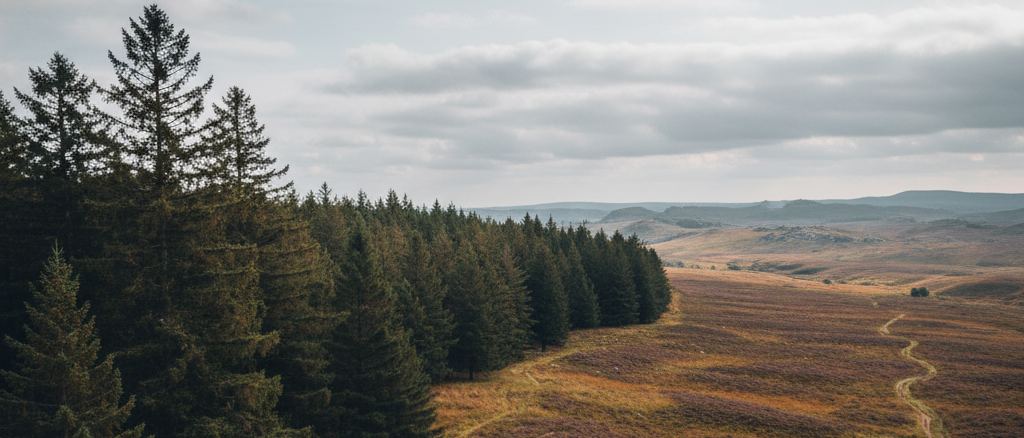
This coast gets rain on something like 200 days a year. Most of it is not weather in the dramatic sense, just a grey that comes in off the water and sits on the hill for three days. A seven night reservation is one draw against that. You will probably get four or five days with rain somewhere in them and one that stays clear from morning until dark, and that one clear day decides whether you drive the pass or look at the cloud where the pass is.
Twenty one nights is three draws. It is also long enough for the calendar to move underneath you. Bantry holds its market on Friday in the square; Skibbereen holds its on Saturday morning at the Fairfield and it is packed away by two. In a single week you catch one of each and cannot tell which one is the usual one. In three weeks you learn that the Friday market thins in the back half of the month, that the fish comes to the Saturday one, and that the second silage cut at the end of July puts tractors on every lane for about ten days.
Eight weeks is a different product rather than a longer one, and the mechanics change first. A house let for a week is turned over every Saturday: cleaned, stripped, remade, let again. A house let for eight weeks is turned over once. The nightly figure the owner writes reflects that, and it is already inside the three prices above: $345 a night at seven nights, $263 a night at twenty one, $194 a night at fifty six. Linen moves to a fortnightly change and the machine in the utility room becomes yours to use as you like.
Then the year moves. Take a season from the first week of September and you get the last fortnight of mackerel off the piers, blackberries in the hedges from the end of August, seabird passage off the southwest headlands through the back half of September, the clocks going back on the last Sunday in October and sunset landing at 17:15 the following evening. Reserve the same eight weeks from the middle of April instead and you get wild garlic in the wooded valleys behind Glengarriff, lambs on the hill fields, the first silage cut, and daylight stretching from twelve hours to sixteen while you sit in it.
The year here, month by month
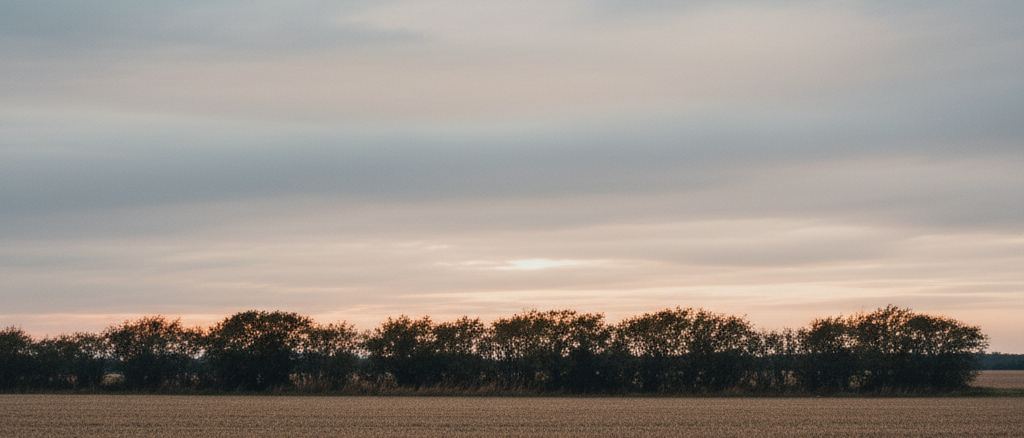
Nothing in this list is a schedule anybody can be held to. It is what the year does on this coast, and it is the reason the same house reserved in February and reserved in July is not the same reservation.
- January and February
- Daytime around 48 F, the sea still near 50 F, and the light gone by 17:10 in January. Half the kitchens in the small towns are shut until March.
- March
- Lambs on the hill fields and wild garlic in the wooded valleys. The sea is at its coldest of the year, about 48 F, colder than the air above it.
- April and May
- Daylight goes from twelve hours to sixteen. The first silage cut goes in at the end of May and the lanes belong to tractors for about ten days.
- June
- Sunrise near 05:15 and usable light until 23:00. Schools break in the last week and from then on almost every let runs Saturday to Saturday.
- July
- Fuchsia in flower along every lane with orange montbretia behind it, and mackerel inshore from about the middle of the month. Second silage cut at the end.
- August
- Warmest water of the year at 59 to 61 F, about six weeks behind the warmest air. Rowing regattas close a harbour road most Sundays.
- September and October
- Blackberries from the last week of August, fuchsia still flowering into the third week of October, and the clocks back on the last Sunday of the month.
- November and December
- Storms arrive in threes and the power usually goes with them. Sunrise 08:40 and sunset 16:25 at the shortest, and village shops keep short hours.
How the weeks are held
You send the dates, the peninsula, the number of people and anything that would spoil it for you: stairs, a dog, a real need for working broadband. Slow Latitudes writes to the houses that are open across your weeks and comes back with a price set against those exact dates, usually inside two to four working days. Nothing is held while you think about it, and nothing is asked of you in the meantime.
This office holds title to nothing it reserves for you. There is no fleet in a yard, no beds on its own books and no berths of any kind on this side of the arrangement. Every night you reserve belongs to somebody else: the owner of the cottage, the family with the farm, the couple with the four rooms over the square. Once the reservation is placed, the party that runs the weeks is the party that sends the bill, direct to you and on its own terms. Slow Latitudes Bookings LLC takes no payment at any stage, and there is nothing to settle on this page.
The flight stays outside all of it, and so does anything to do with entry documents. Those sit between you and the authority that issues them, and nobody here advises on them in any form.
Should you prefer to say it aloud first, the line is +1 (225) 766-2418, and the office is at 9422 Common Street, Suite 2, Baton Rouge, LA 70809, in East Baton Rouge, Louisiana. Written requests go to bookings@slowlatitudes.com. If something on this page is wrong, and on a coast that redraws its crossing timetables twice a year something eventually will be, send it to corrections@slowlatitudes.com and it gets corrected.
Ask this office to reserve your weeks
The form below is open every hour of every day, and what it collects is read by a person, who replies within one business day. Nobody is committed by sending it, nothing is charged for it, and no call or message goes out from here unless you ask for one.